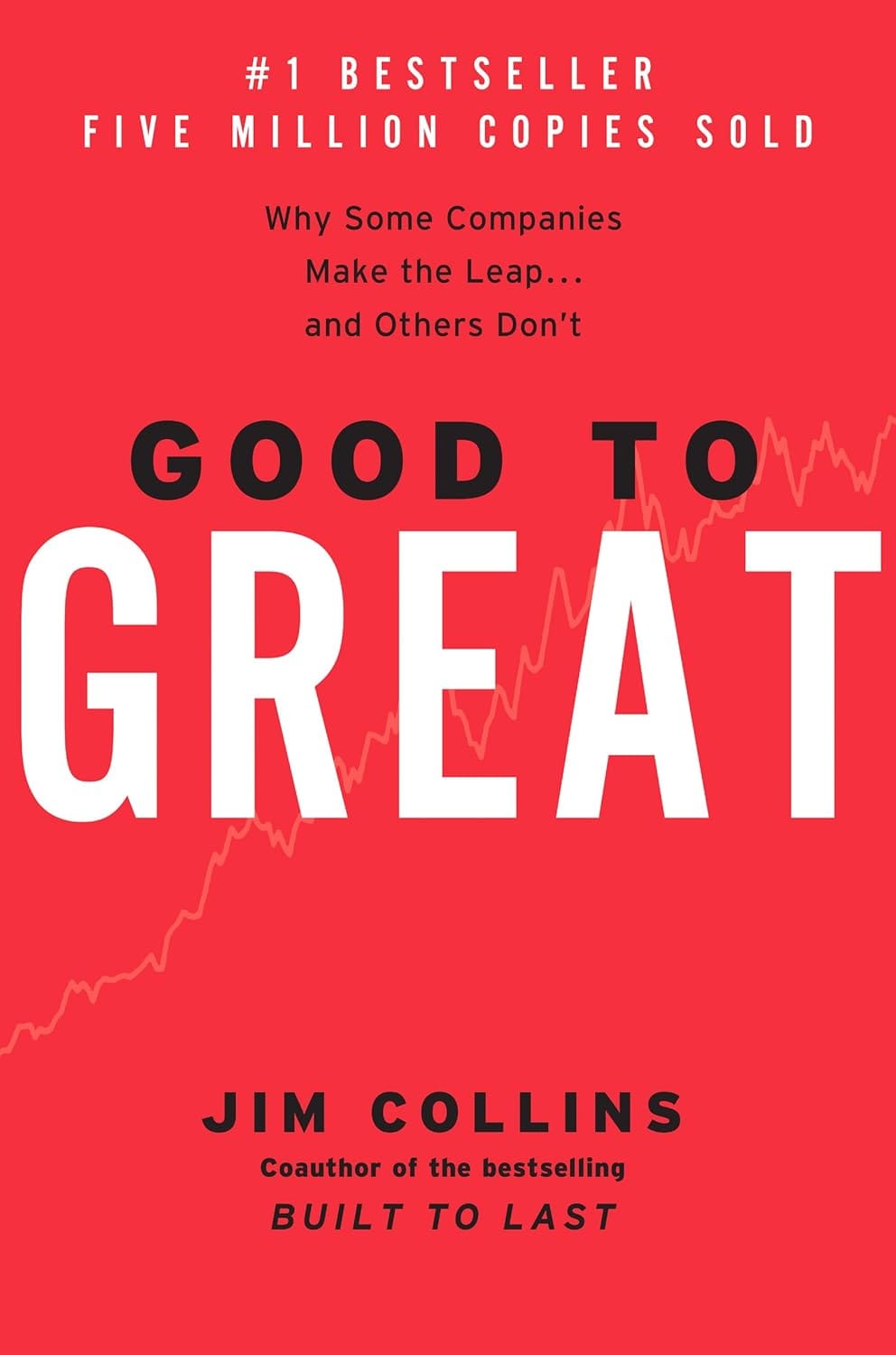
Good to Great
Book 1 of 6: Good to Great
| ASIN | 0066620996 |
| Publisher | Harper Business; First Edition |
| Publication date | October 16, 2001 |
| Language | English |
| Print length | 300 pages |
| ISBN-10 / 13 | 9780066620992 / 978-0066620992 |
| Dimensions | 6.12 x 1.05 x 9.25 inches |
| Best Sellers Rank |
|
| Customer Reviews | ★★★★★ 4.5 out of 5 (9,740 ratings) |
Why Good is the Enemy of Great: A Deep Dive into ‘Good to Great’ by Jim Collins
In the world of business literature, few books have achieved the legendary status of Good to Great by Jim Collins. If you’ve ever wondered why some companies stay “just okay” while others transform into market-dominating powerhouses, this book is your roadmap.
At JustRank, we believe that understanding these principles isn’t just for CEOs—it’s for anyone who wants to level up their career and mindset.
1. What is This Book About?
The core premise of Good to Great is simple yet profound: “Good is the enemy of great.” Most companies (and people) fail to become great because it is so easy to settle for being “good enough.”
Jim Collins and his research team spent five years analyzing 1,435 companies to find the ones that made a “quantum leap” in performance. They discovered that greatness isn’t born from a single “eureka” moment or a charismatic savior. Instead, it’s the result of a disciplined process.+1
Key Takeaways:
- Level 5 Leadership: Great leaders are a paradox of personal humility and professional will. They aren’t “rockstar” celebrities; they are quiet, determined, and focused on the company’s success over their own ego.+1
- First Who, Then What: Before you decide where to drive the bus, you must get the right people on the bus (and the wrong people off). Strategy matters, but the team matters more.
- The Hedgehog Concept: To succeed, you must find the intersection of three circles: What you are deeply passionate about, what you can be the best in the world at, and what drives your economic engine.
- The Flywheel Effect: Success doesn’t happen overnight. It’s like pushing a massive, heavy flywheel. At first, it takes immense effort to get a single turn, but consistent pushing eventually creates unstoppable momentum.+1
2. About the Author: Jim Collins

Jim Collins is a student and teacher of what makes great companies tick. A former faculty member at the Stanford Graduate School of Business, he has invested over 30 years into rigorous research on corporate sustainability and growth.+1
Collins is not just an author; he is a “Socratic advisor” to leaders in both the social and business sectors. He is famous for his “management laboratory” in Boulder, Colorado, where he continues to distill complex data into timeless leadership principles. His other bestsellers include Built to Last and Great by Choice.+2
3. Book Comparison: The Jim Collins Trilogy
If you are building a library for success, it helps to know how Good to Great fits alongside Collins’ other masterpieces.
| Feature | Good to Great | Built to Last | Great by Choice |
| Main Focus | How to become great. | How to stay great. | Thriving in chaos. |
| Core Concept | The Hedgehog Concept | Big Hairy Audacious Goals (BHAG) | 20-Mile March |
| Leadership | Level 5 Leadership | Clock Building, Not Time Telling | Productive Paranoia |
| Ideal For | Startups & struggling firms. | Established corporations. | Leaders in volatile markets. |
4. Buy This Book From Here
Ready to make your own leap? Don’t let “good” stop you from reaching “great.” Secure your copy of Jim Collins’ masterpiece today.

Good to Great: Why Some Companies Make the Leap…and Others Don’t
In the world of business literature, few books have achieved the legendary status of Good to Great by Jim Collins. If you’ve ever wondered why some companies stay “just okay” while others transform into market-dominating powerhouses, this book is your roadmap.
Buy Now on Amazon